









ON ISLAND
Helping Homeless Animals Find Their Way
Second Chance Animal Rescue of Martha’s Vineyard
By Abby Remer
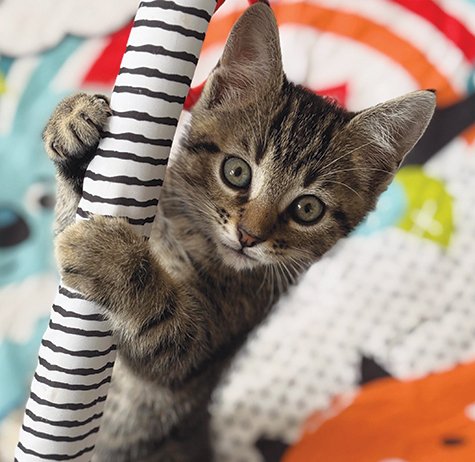
Walk into Second Chance Animal Rescue, and you’re likely to see cats lounging in a large, comfortable room outfitted with four or five cat trees and shelves to nestle in. The second room is often full of little kitties, chasing and tumbling about. And you might hear dogs barking from the fenced-in backyard.
This 501(c)(3) no-cage, no-kill shelter is home to anywhere from 50 to 60 animals over the course of the year, many rescued from high-kill shelters and on their way to loving forever homes. And Second Chance’s success rate in finding the perfect human-animal match is high. founder Kym Cyr says, “Over the pandemic, we adopted out 122 cats and kittens and 65 dogs and puppies. I know that off-Island shelters and people were bringing them back after the pandemic. I got only one dog and two cats returned, which were subsequently adopted out within three weeks.”
For Cyr, Second Chance is a labor of love. “I’ve had animals all my life. When I moved to South Carolina from Connecticut in about 1974, I saw the reality of how people treated their animals. They were chained up in the backyard, cats let loose without anyone caring for them, and so they ended up in high-kill shelters. Up here, they’re in your house. They’re sleeping with you. You treat them like family members. There they don’t. It made my heart stop a little bit.”
Cyr was doing some rescue work in South Carolina with others. But she hooked up with Laurie Huff from CATTRAP when she came to visit her mother, who lived on the Vineyard and volunteered with the organization. Cyr recalls that Huff told her to bring cats up when she was driving to the Vineyard. “I would put 17 kittens from the high kill shelter in my car. When I got here, she would look at me, and I’d explain, ‘I don’t know how to count.’”
When Cyr moved here full-time to be closer to her mom about 37 years ago, she started Second Chance in 2006, which, among other things, involved establishing an isolation room and requiring health certificates for any animal brought into Massachusetts and released for adoption.
Second Chance is part and parcel of Cyr’s home. “I had the house, and we added on. Originally, we also had cats in the basement apartment, and dogs in my bedroom, in the living room, as well as in the kitchen.”
Although Cyr takes in strays from the Island, the majority of cats and dogs currently come from shelters and sanctuaries in Alabama. “We’ve also done North and South Carolina, Georgia, Mississippi, Texas, Kentucky, Arizona, and Arkansas.”
Second Chance pays for all their medical costs before they arrive on Island. “We also do as many spays and neuterings as we can down there because it’s so expensive here.” The animals are eligible to come once they receive a health certificate and most, if not all, of their vaccinations.
Cyr then hires transporters, and upon arrival, every animal must be quarantined for 48 hours. Then they must get a Massachusetts health certificate as well. Fortunately, a local retired vet volunteers to help them obtain their Massachusetts health certificates. “She comes here and spends many hours,” Cyr notes.
The animals stay at Second Chance until they are spayed or neutered, if they haven’t already been. Kittens must weigh at least two pounds, be about eight weeks old, and be healthy. Waiting until they’re older can be chancy. “I’ve seen cats that are pregnant as young as four months old.” Likewise, the younger ones often recover more quickly than the older ones. “They might be little, but they come out of it very fast. That night, they’re usually running around like they’re maniacs. We’ve never had a problem doing it that young.”
Cyr stresses, “Nothing leaves without being spayed or neutered. We must be the solution, not the problem.” She is adamant about this policy after seeing so many animals being destroyed in overcrowded kill shelters.
All funds from donations and grants go to spaying, neutering, and medical care, and adoption fees typically don’t cover what Second Chance spends. Because she’s retired, there’s also less income coming in. “But you do what you have to do,” Cyr shares about always figuring it out.
Cyr, who has dedicated her life to Second Chance for twenty years, says, “The animals teach you so much, if you’re open to it.” Being patient is something she’s learned, especially when nursing animals back to health. “Sometimes we expect things in an instant, but it’s not always that way.” Fortunately, Second Chance’s success rate is impressively high, and many a cute furball has found their forever home here on the Vineyard.
To learn more about Second Chance, adopt, or donate, visit: secondchanceanimalrescuemv.org or call 508-560-6046. Donations can be made via PayPal and Venmo, E-mail: scarofmv@gmail.com